KR Game Studios

Making Games on a Shoestring Budget!
Community & Socials
- Discord
- Bluesky
- Studio GitHub
- Personal GitHub
- Cluck me! 🐔
Making Games on a Shoestring Budget!
by Kayne Ruse (Ratstail91)
Each Pokémon generation changed something fundemental about Pokémon as a whole. That’s not surprising of course, it would be surprising if it didn’t. But there’s something about looking back at the older games that gives an incredible insight to how the devs envisioned things in the mid-90s, and how the games were crafted. The gen 1 games in particular are notoriously buggy, but that seems to have overshadowed just how well these games were designed. Yesterday, I started a playthrough of Pokémon Red alongside my brother (who is playing Pokémon Blue), and I want to touch on a few things I’ve found that are legitimately surprising and clever.
Spoiler warning for the early sections of Pokémon Red and Blue, but at this point I think you know most of it already.
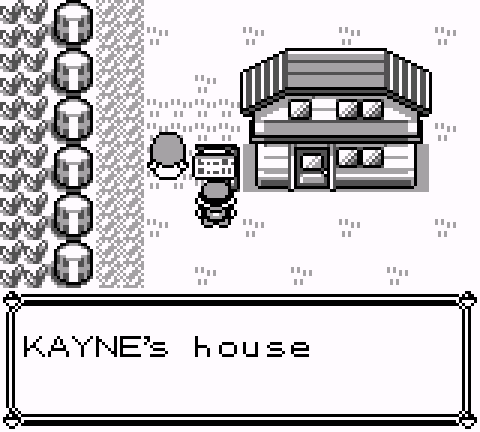

Why does it show the kid's name instead of the parent's?
First, not many people know this, but there’s a way to get free Pokéballs from Professor Oak, but the prerequisites are extreme:
This feels much more like a stop-gap for players who simply haven’t figured out how to catch Pokémon yet which, given that these are the first games, makes a lot of sense. I knew the free Pokéballs existed, but looking up how to obtain them was a surprise.
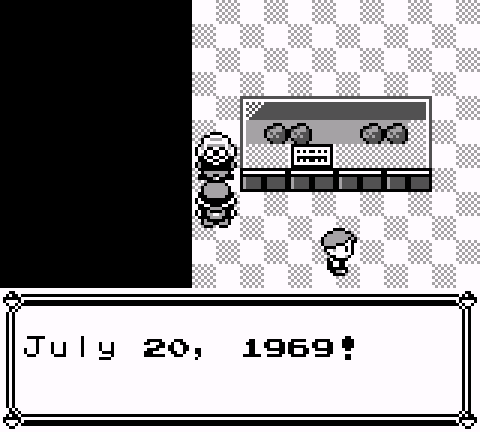

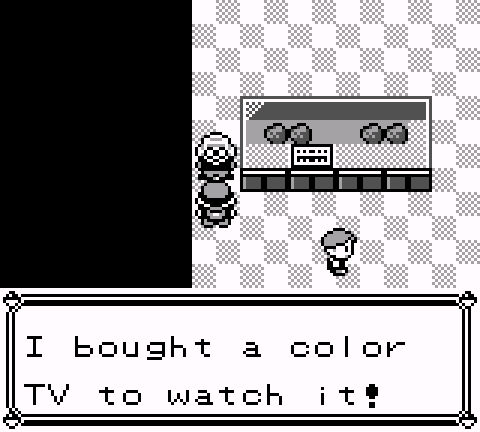

Today, this hits different.
There’s a museum in Pewter City that has exhibits featuring real-life elements, particularly spacecraft. In fact, the early days of the franchise had many allusions to real world places and events, and there were even occasional cameos by real-world animals in the anime and card game. While these were all but abandoned later on, it does show that the Pokémon world was originally envisioned as a more fantastical version of the real world, which I think gives a new perspective on the series. I almost wish they’d kept going with this approach, if only to see how the modern day would be portrayed for today’s audience.
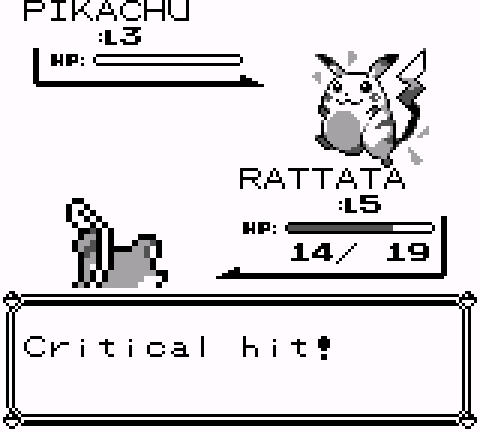


SHE LOOKS LIKE A PIG OMG I WANT 20
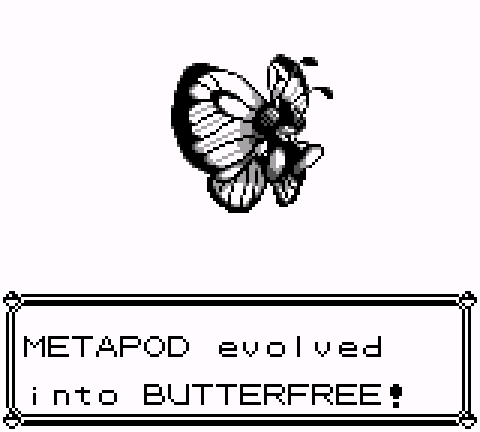
The old-school sprites have such a unique charm. Maybe it’s caused by an oversaturation of the standard designs, but I find unique-looking Pokémon to be super appealing - even Magikarp Jump, which by all metrics is a super bland skinner box, is still engrossing purely because of the unique Magikarp designs you can encounter. Also, I don’t think I’ve ever seen my Magikarp get carried away by a Pigiotto and my protagonist walk home in tears before. That game is dark.
I can’t believe I’ve written this much without mentioning the Special stat, which is why I wanted to write this in the first place.
In gen 1, instead of IVs (individual values), Pokémon had DVs (deterministic values) that varied from 0 to 15. These stats were Attack, Defense, Speed an Special - the last of which would be split into Special Attack and Special Defense starting in gen 2. However, I’m wondering if this might’ve been a mistake, in terms of game design and mechanical depth.
As it stands today, Attack and Special Attack function the same, and are only differentiated by external factors like the Pokémon’s base stats and the moves used. The Physical/Special Split of gen 4 made this interchangable nature even more explicit, as a move’s catagory was no longer tied to its type. In gen 1, The special stat explicitly functioned differently than Attack and Defense, and I wonder if that might’ve been a more interesting approach.
Some other random notes:
I’ve just finished the second gym and cleared Nugget Bridge, so I’ll leave this here for now. There’s a lot of aspects of gen 1 that make me scratch my head, but now that I’ve gone back and played it, I’m starting to see the brilliant logic behind it. I’m looking forward to what’s to come.
Continued in Pokémon is Technical…
When I’m not playing with my Pokéballs, I can usually be found on Bluesky or Discord. If you’d like to show your support, I also have a Patreon, and I’d love a Coffee via Ko-fi.
tags: gaming - pokemon - review